Before doors open
The room is tuned, patched, and ready.
Sightlines, acoustic intelligibility, screen brightness, source routes, lighting cues, recording paths, and the operating checklist are validated before the first seat fills.
 Start a brief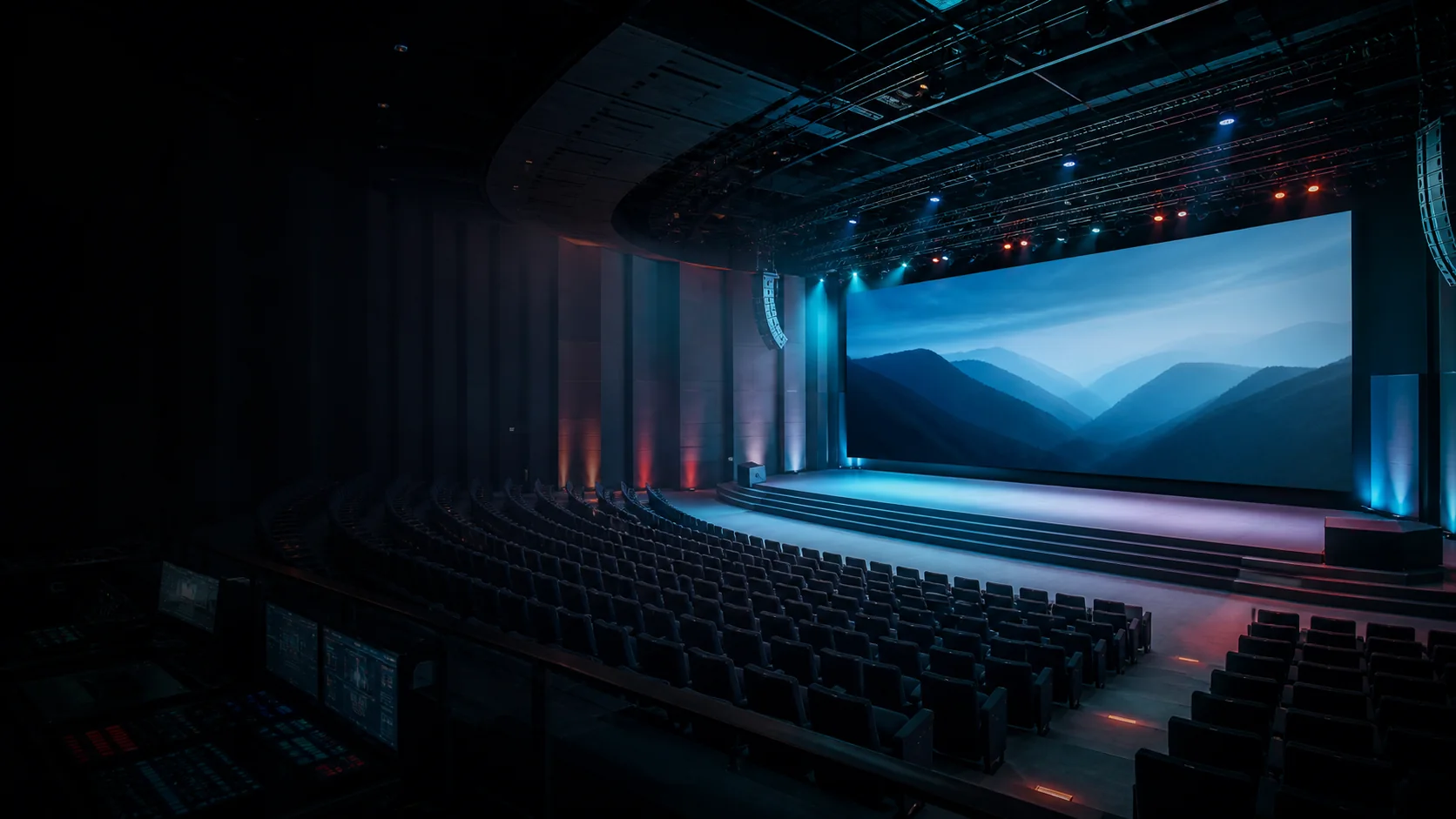
AV / Experience
Auditoriums combine acoustics, sightlines, content, control, operator confidence, network capacity, and a rigorous acceptance path.
The customer situation
The operating journey
SECCOM solution design follows the situation through preparation, live use, and the next handoff. That is where rooms, networks, data, people, and support become one system.
Before doors open
Sightlines, acoustic intelligibility, screen brightness, source routes, lighting cues, recording paths, and the operating checklist are validated before the first seat fills.
During the programme
A presenter can arrive with a different device, a remote speaker can join, and the operator can change scenes without breaking the room's rhythm.
After the applause
Content, logs, spares, support routes, and the next operator handoff are left in a condition that protects repeatability.
What high quality means here
Audience sightlines and speech intelligibility from the worst seat, not only the front row
A control surface that lets one trained operator run the normal show
Acceptance evidence for content, source switching, recording, room control, and recovery
Questions worth carrying into design
The architecture around the use case
The application is integrated; solution ownership stays legible so the right specialists can make the right promises.
Customer language
A room or venue where people can hear, see, present, learn, meet, and experience content properly.Market language
Professional AV, venues, acoustics, visualisation, room control, unified communications, contact centres, and digital signage.
Ecosystem alignment
Collaboration, professional audio, visualisation, projection, distribution, control, signage, and cloud-management specialists.
Public OEM evidence
These are official public references used to sharpen the design conversation. They are not partnership, certification, or authorised-reseller claims.
Christie positions projection, processing, and alignment around making content fit the physical environment; that is a useful design cue for venue work.
Open official sourceChristie describes immersive environments as a combination of content, projection, sensing, and the way visitors move through a space.
Open official sourceCrestron presents familiar interfaces that can unify AV, lighting, HVAC, and peripherals across rooms and venues.
Open official sourceA responsible next step
Next vector
We will help you frame the situation, test the dependencies, and bring the right ecosystem into the room.