The signal
The room separates the important from the merely visible.
Sources are mapped to decisions, not collected for their own sake; the operator sees context, confidence, and the next responsible action.
 Start a brief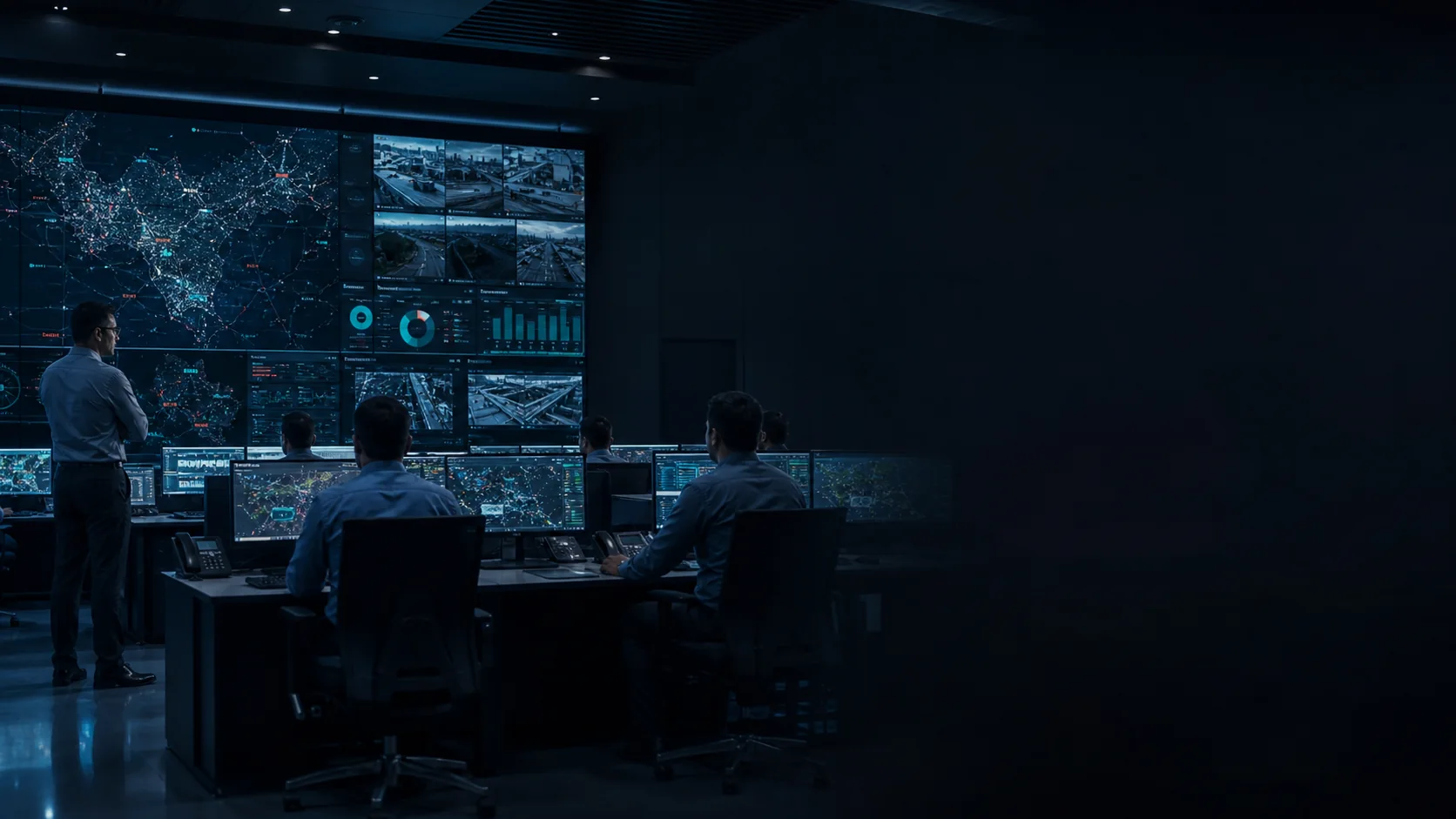
Command / Smart Infrastructure
ICCCs bring sources, operators, response workflows, resilient rooms, and field systems into a working operating picture.
The customer situation
The operating journey
SECCOM solution design follows the situation through preparation, live use, and the next handoff. That is where rooms, networks, data, people, and support become one system.
The signal
Sources are mapped to decisions, not collected for their own sake; the operator sees context, confidence, and the next responsible action.
The incident
Video, maps, communications, field teams, and escalation paths remain available as the situation changes and the room takes on more pressure.
The handoff
The workflow captures decisions, ownership, service impact, and the operational learning required to improve the system.
What high quality means here
A shared operating picture designed around decisions and handoffs
Resilient source integration, operator ergonomics, and room control
Acceptance and support evidence for the live incident path, not only the display wall
Questions worth carrying into design
The architecture around the use case
The application is integrated; solution ownership stays legible so the right specialists can make the right promises.
Customer language
One place to see what is happening, understand it quickly, coordinate teams, and act during an incident.Market language
NOC, SOC, ICCC, emergency operations, incident management, operational intelligence, and control-room visualisation.
Ecosystem alignment
Workflow, visualisation, operator experience, resilience, surveillance, AV, networking, and application specialists.
Public OEM evidence
These are official public references used to sharpen the design conversation. They are not partnership, certification, or authorised-reseller claims.
Christie explicitly treats control rooms as mission-critical operating environments, distinct from corporate display or event work.
Open official sourceCrestron includes command centres among environments where consistent, familiar control interfaces matter.
Open official sourceA responsible next step
Next vector
We will help you frame the situation, test the dependencies, and bring the right ecosystem into the room.