 Start a brief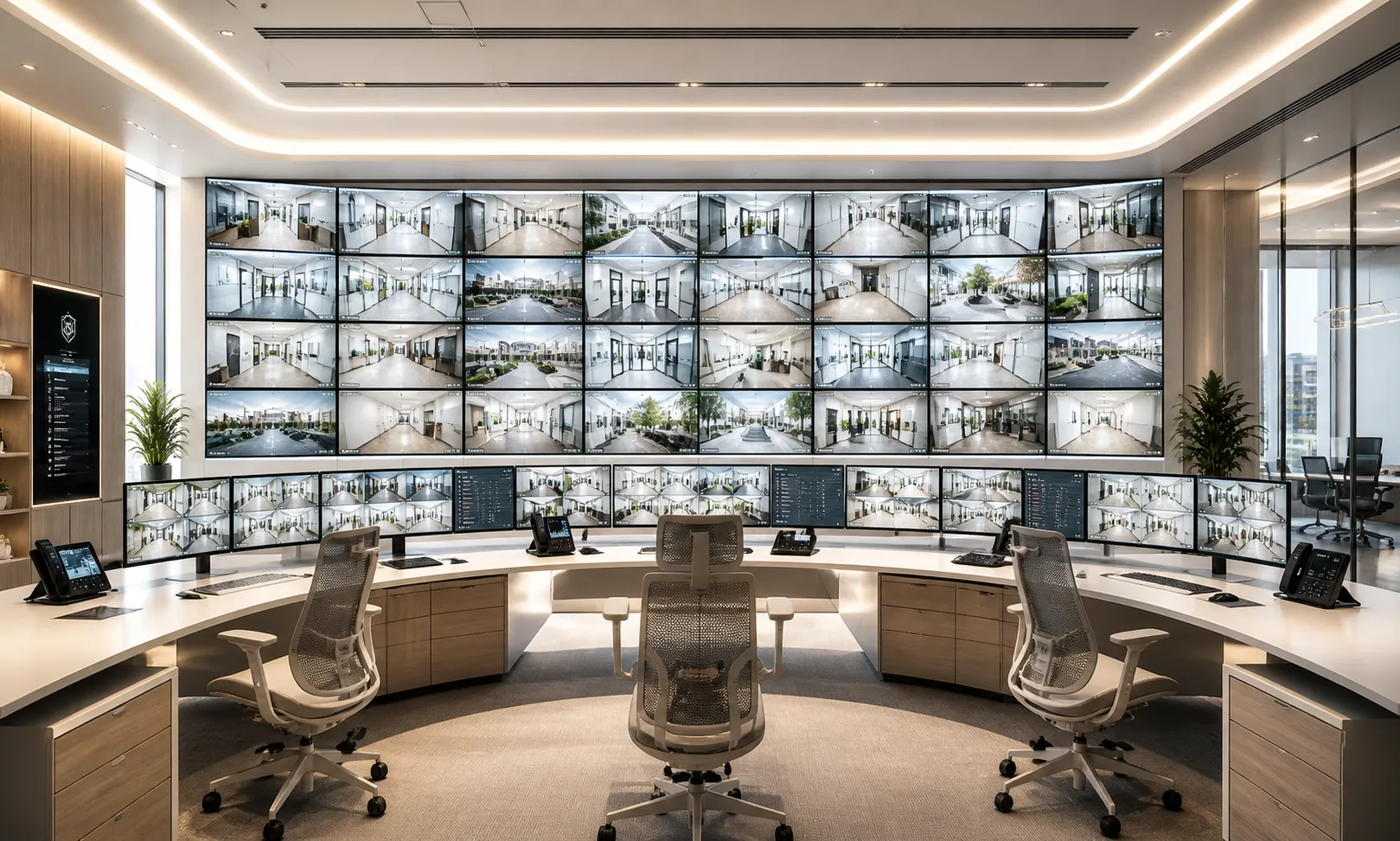
Retail / Surveillance
You have cameras in every store. You still cannot explain where margin is disappearing.
Loss prevention connects video, access, network resilience, incident workflow, and evidence retrieval to a business question rather than a camera count.
The customer situation
A working system is the experience people have when the technology is doing its job.
- Start with the person, operator, or audience who carries the consequence.
- Make the dependency chain visible before the equipment list hardens.
- Design the normal moment and the failure handoff together.
- Accept the result against the lived outcome, not only the installation checklist.
The operating journey
Three moments that make or break the experience.
SECCOM solution design follows the situation through preparation, live use, and the next handoff. That is where rooms, networks, data, people, and support become one system.
What high quality means here
The details customers feel, even when they never name them.
Questions worth carrying into design
Before the product list becomes the architecture.
- Can the team find useful evidence quickly?
- What happens during a link failure?
- Which events are worth escalating and why?
The architecture around the use case
One customer situation. Several solution responsibilities.
The application is integrated; solution ownership stays legible so the right specialists can make the right promises.
Customer language
Protect people, premises, and assets; control entry; deter incidents; and find useful evidence quickly.Market language
Video management, access, intrusion, perimeter, analytics, evidence, and physical-security operations.
Ecosystem alignment
Camera, VMS, access, intercom, analytics, cloud-platform, and specialist integration teams.
A responsible next step
Bring the operating moment, the constraints, and the people who inherit it.
- Existing drawings, room or site constraints, and current failure points
- The customer outcome and who accepts it
- Relevant OEM, platform, regulatory, and support constraints
- The first proof we should produce before the BoM becomes expensive
Next vector
Make the experience dependable before you make it expensive.
We will help you frame the situation, test the dependencies, and bring the right ecosystem into the room.