Before the consult
The room is ready before the clinician arrives.
Identity, device health, camera framing, audio, display, network path, and the patient record are checked as one clinical workflow.
 Start a brief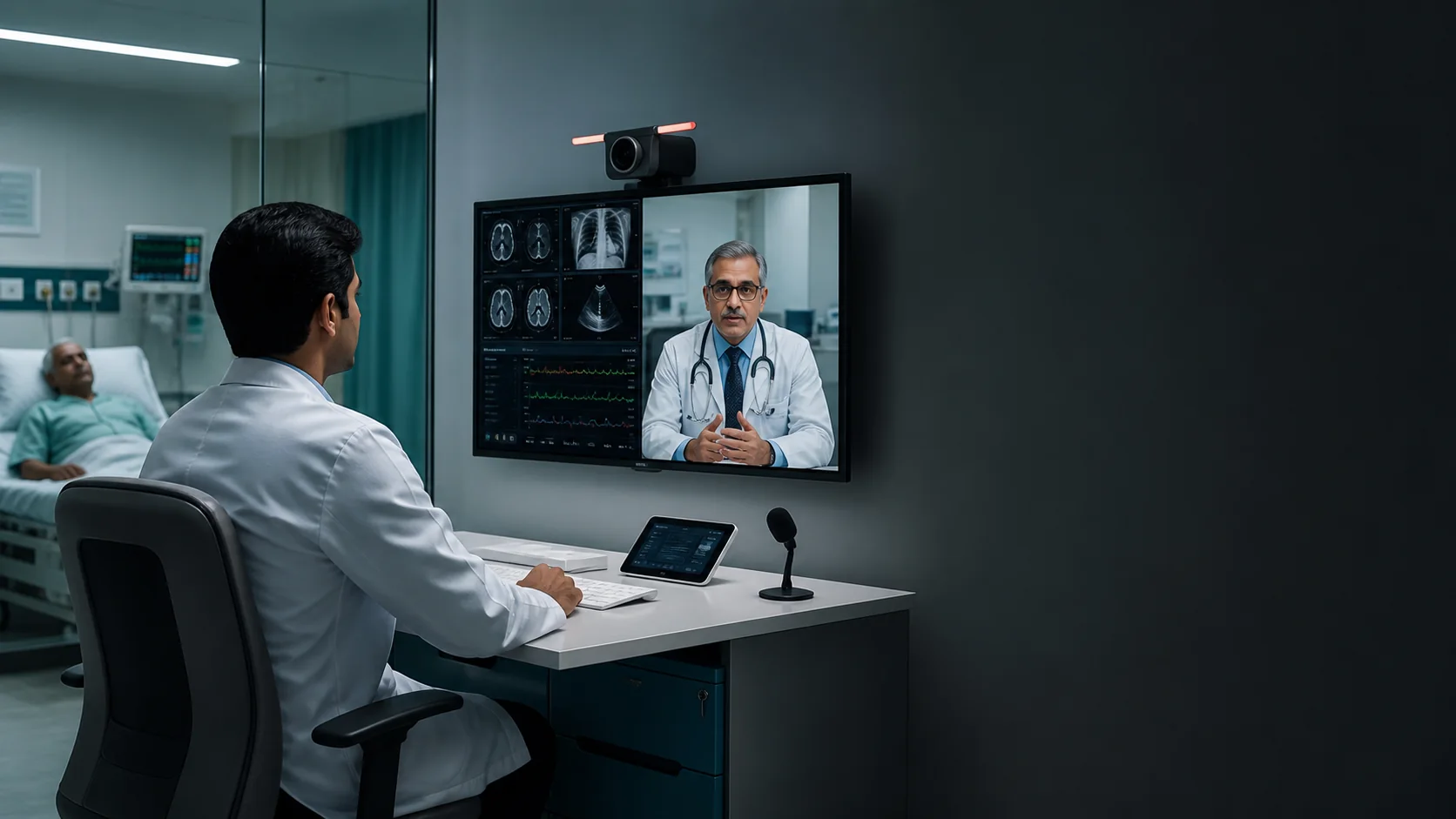
Healthcare / AV / Data
Telemedicine succeeds when the room, connectivity, identity, data, workflow, and support model behave as one care experience.
The customer situation
The operating journey
SECCOM solution design follows the situation through preparation, live use, and the next handoff. That is where rooms, networks, data, people, and support become one system.
Before the consult
Identity, device health, camera framing, audio, display, network path, and the patient record are checked as one clinical workflow.
During the consult
The patient remains the focus while imaging, vital signs, documents, and additional care-team voices appear without a technical detour.
After handoff
The encounter closes with a usable record, a supportable room, and an operating owner who knows what happens when a dependency fails.
What high quality means here
Clinical audio and video that does not make the patient compensate for the room
Secure information exchange across the care team and existing records workflow
A support and acceptance path that includes the clinical users, not only the installer
Questions worth carrying into design
The architecture around the use case
The application is integrated; solution ownership stays legible so the right specialists can make the right promises.
Customer language
A room or venue where people can hear, see, present, learn, meet, and experience content properly.Market language
Professional AV, venues, acoustics, visualisation, room control, unified communications, contact centres, and digital signage.
Ecosystem alignment
Collaboration, professional audio, visualisation, projection, distribution, control, signage, and cloud-management specialists.
Public OEM evidence
These are official public references used to sharpen the design conversation. They are not partnership, certification, or authorised-reseller claims.
Cisco frames telehealth around care at a distance and virtual collaboration between healthcare professionals, not video alone.
Open official sourceCisco describes collaboration across patient and care-team workflows, with security and quality extending from the network to the edge.
Open official sourceA responsible next step
Next vector
We will help you frame the situation, test the dependencies, and bring the right ecosystem into the room.